I
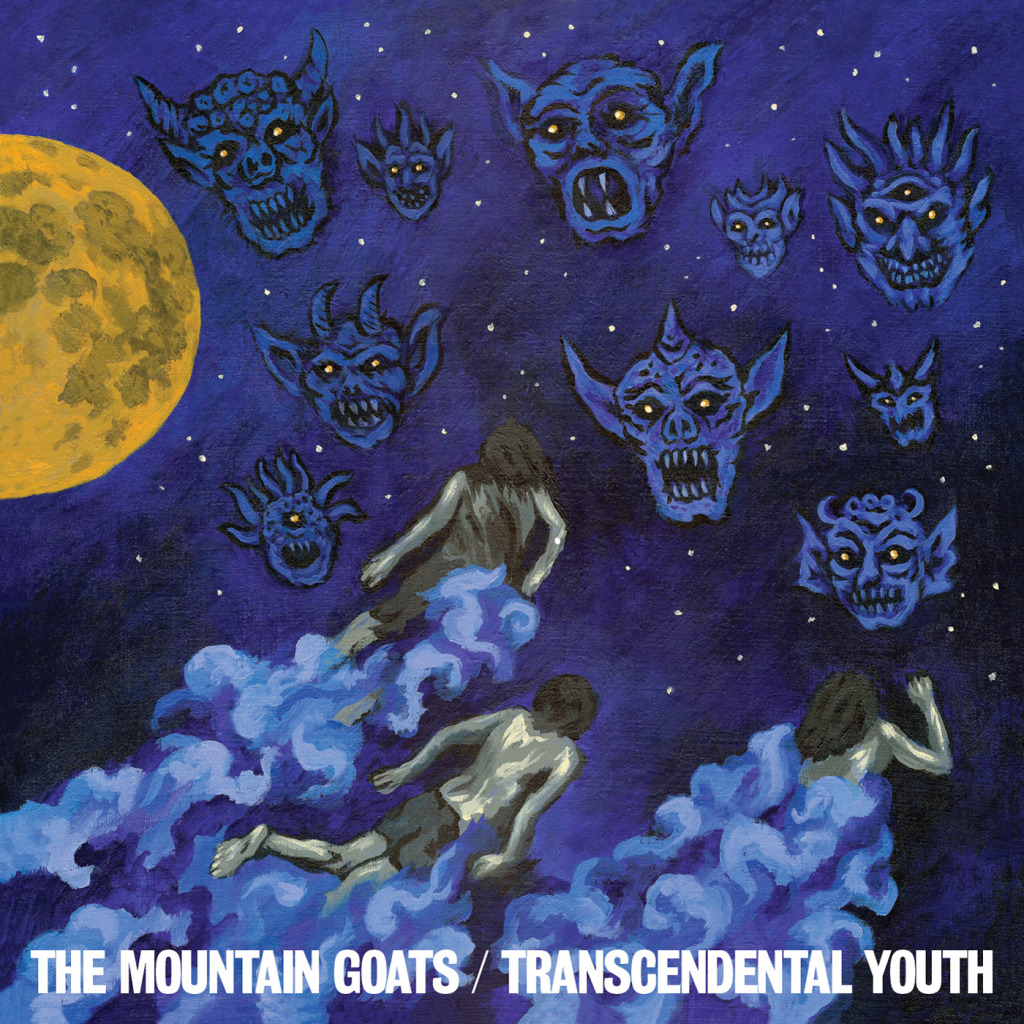
can say with a fair amount of certainty that Transcendental Youth is one of my favorite albums ever. I'm not
sure if that designation came before or after I listened to the album on repeat
for 2 weeks straight, or before or after I then proceeded to listen to each
individual song on repeat for days at a time while I fine-combed essays about
every. single. track. I'm also not sure what compelled me to do such a thing,
but I am absolutely sure about one thing: in the process of writing about Transcendental Youth, I went through a
lot, and this album is now inextricable from the snapshot of my being from this
point in my life. I opened the door to the recesses of my mind and let this
album echo through its hallowed halls. I became the album and the album became
me.
I'm not even saying that in a
hippie-new-age-granola-whatever kind of way, not that I'm denigrating that
"way" in any respect. I mean that, this album truly became woven into
the fiber of my being. I wrote thousands of words every day, rewriting,
revision, combing through, refining, painfully cutting out novellas-worth of
material—and why? WHY?! I still don't know. I still don't understand what it
was about this album compelled me so strongly to write over 10,000 words after
editing (it's not even my favorite Mountain Goats album), or what about this
experience is now compelling me to write further (I'm currently working on
turning this essay into a short novel?), or how I can possibly still have MORE
to say about this album.
Perhaps it's because Transcendental Youth is so focused
explicitly—more explicitly than previous Mountain Goats albums—on mental
illness, a favorite topic of mine, and one I've taken to talking about more
loudly and frequently of late. The most captivating aspect of the Mountain
Goats' work has always been the flawed, complex, beautiful lives of the
characters that John Darnielle creates, and the intimate details that he lays
out about them. This album is no different, plus it’s therapeutic to no small
degree. Not constructing any pedestals here, but John Darnielle does a very
good job of validating listeners, telling them to STAY ALIVE, get garish
tattoos, go where the heat's unbearable, and do every stupid thing to feel
great. The underlying philosophy of the Goats' material—and Transcendental Youth in particular—is
distilled LaVeyan Satanism at its most humanistic and refined: live your life
and do your best to lessen the suffering of yourself, and do your best not to
add the suffering and others.
I think this album came to me
at the right time in my life and my personal mental health journey, and it said
exactly what I needed to hear. I'm very hesitant to assign intent to any work
of art, because that's all assumption and frankly I find it insulting to the
artist, so I do my best in this essay to avoid discussing JD's intent, but rather I dance around
assigning intent while interpreting the album through my own individual reality
funnel. As you can surely tell, brevity is not my strong suit, so I highly
commend you if you stick with it through the end. This is a stupid thing I
really needed to do to stay alive.
AMY AKA SPENT GLADIATOR 1
As an album opener I think this song does a damn fine job. In all
of my dreams, John Darnielle is strutting onto a stage and Peter Hughes is
picking up his bass and grinning at an ecstatic audience in a bar somewhere in
Minnesota in March (which is inarguably the worst month
to be anywhere, let alone Minnesota), an oasis of light in a bleak and desolate
late-winter landscape, and the crowd quiets down for just a moment until the
CLICKCLICK CLICKCLICK CLICKCLICK CLICKCLICK comes in from Jon Wurster and every
person in the room looses their marbles. The energy of the song is just
palpable, it’s ripe, and man if listening to this song doesn’t make
you want to scream then you need to ask yourself: “what’s wrong with
meeeeee?”
In this song, JD pretty much lays out the same philosophy that
he’d been spouting in interviews for the few years prior to the release of this
album, which is: whatever you do to make yourself happy is okay, as long as
you’re not hurting other people, or at least as long as you don’t try to hurt
other people. He told Rolling Stone magazine in August 2012 that “All the
self-destructive stuff I did to myself when I was younger was vital,” alluding
to his former drug use and general bullet-biting and self-destructive behavior,
“and I did it to stay alive. So therefore it was all good. The only time it’s
not good is when it hurts anybody else. Short of that, anything you do to make
yourself OK, is OK.” It’s a pretty good philosophy, really, because
honestly we put so much judgment on ourselves—because of what? Not to make any
sweeping generalizations, but we have this common notion in our society that
mental health is a "mental illness" issue, that people who see
therapists are CRAZY and CRAZY = UNLOVABLE apparently, and if we don’t seem
perfect perfect perfect all the time then it’s embarrassing, we should be
embarrassed, and no one is allowed to have problems or be imperfect! No one is
allowed to be anything but “good,” now may I direct you to exhibit A:
INT: GROCERY STORE IN ANYWHERE, USA
PERSON 1: Person 2! Hey! Hi! How are you!?
PERSON 2 [INTERNALLY]: I’m only here
because I went into the cabinet and the guy on the Lucky Charms box made me cry
so I came to the store to buy some Cap’n
Crunch because Cap’n Crunch seems like a much more loving guy who could
probably get real down on some platonic cuddling and I bet his beard
would mop up my tears real well while his strong sailor arms hold me when the shakes get bad.
PERSON 2 [EXTERNALLY]: I’m good, I’m good!
How are you!? It’s been so long!
PERSON 1 [INTERNALLY]: Yes it’s been so
long because I don’t give two shits about you, or at least, I tell myself I
don’t care about you when really I’m just hurt and upset that you don’t make
more of an effort to have a friendship with me, which is probably because you
hate me, because there is so so so much to hate about me, so as a defense
mechanism I am being aloof from you on purpose, because then I AM IN CONTROL of
the fact that our friendship is so tenuous.
PERSON 1 [EXTERNALLY]: Yeah! Well see you
later!
PERSON 2 [EXTERNALLY]: Yeah! Bye-bye now.
PERSON 1 & PERSON2 [INTERNALLY;
HARMONIZED AT A MAJOR 2ND]: [SCREAMING]
END.
Now of course not everyone is a fucked up thing, but anyone who
doesn’t have some level of “issues” is a mythical creature probably. Whether or
not you need therapy is a matter of personal preference and, hey, no sweat
either way. What I’m saying is that if we were all a little more comfortable
with honesty and intimacy, and we all did every stupid thing that made us and
each other feel alive, I think we’d all grin a bit more, and what a world that
would be.
If anyone tries to tell me this song is about Amy Winehouse, that
person will receive a swift shower of daggers from my eyeballs. It’s not about
Amy Winehouse, though JD did write it after Amy Winehouse died. He told Time
Magazine in September 2012: “When Amy Winehouse died, I wrote the first
‘Spent Gladiator’. That’s what people don’t say when drug addicts die—that they
are mentally ill, that it is a disease. I felt really sad and I thought about
all the other Amy Winehouses in the world who aren’t famous, whose deaths go
uncelebrated.”
LAKESIDE VIEW APARTMENTS SUITE
This is the first piano song we get on the album. In
general, Transcendental Youth relies heavily on piano, which
is awesome because as much as I love the kid-with-a-hammer JD that we hear on
all the early tMG albums, we all know that when he whips out the grand piano
that things are definitely getting especially real,
And, yeah. Things get pretty real in this song.
The first stanza alone has several opportunities for me to pause
to sit with my mouth agape in awe/jealousy: “downtown north past the airport
/ a dream in switchgrass and concrete / three gray floors of
smoky windows / facing the street”. Ladies and gentlemen, that is how you set a
scene. Extrapolating from interview data and Google Maps, this stanza is
placing us in north Portland (Oregon) near Smith Lake. As far as I can tell,
this song is about some people who are STAYING ALIVE despite some legit
maladies, all backdropped to the bleak landscape of north Portland (it's not
difficult to make north Portland hella bleak tbh).
I think the most telling line
in the song is “days like dominoes / all in a line”. The solitude of this song
is almost frenetic in nature (evidenced by the energy bubbling in JD's vocals,
and unlike the solitude in “In Memory Of Satan,” see notes there for more
info). Frenetic solitude is a very vivid emotional state that John has written
extensively on (see: Get Lonely, entire Goats discog actually) but
I think he captures it here so adeptly, with a haunting quality not seen since
(arguably) "Lovecraft In Brooklyn" or "Wild Sage". There’s
a beginning-and-end relationship between the dominoes line and the line three
stanzas later, “emerge transformed / in a million years / from days like
these”, the intermediate words describing an amalgam of moments passing in
flashes of awareness.
The most overt part of the song is the powerful image of
#tenuouslyfe that it injects into your chest, and that's certainly the
take-away point of the song, but which I think is most interesting thing about
"Lakeside View" is the seemingly unintentional shout to Elliott
Smith. We know that JD is not above explicit calls to other artists; “Fall of
the Star High School Running Back” off of the Goats’ 2002 MASTERPIECE All
Hail West Texas gives us the line “giving ends to your friends and it
felt stupendous” which is a clear reference to the song “Big Poppa” by
Notorious BIG. And something about JD’s voice takes away the swagger of rap
lyrics to reveal the dark véracité that lays just beneath the surface of
hip-hop. See: JD covering “Ignition (Remix)” by R. Kelly, also see: the line
“lakeside view for my whole crew”. The way JD spits out the word
“crew” makes it such an angry and controlling and insidious word, it just sears
you like a rugburn. JD has the perfect voice for rap, and he would/could/should
make millions in the rap game, and to be perfectly fair, if the lyrical content
from his career as a folk-rock/whatever musician is any kind of indication, he
would probably have his own wing in the rap game museum in rap heaven right
between RZA and Q-Tip.
Back to Elliott Smith.
J. Darnielle sings in “Lakeside View Apartments Suite”:
And just before I leave
I throw up in the
sink
One whole life
recorded
In disappearing
ink
Elliott Smith sang in “A Fond Farewell”:
Veins full of disappearing ink
Vomiting in the
kitchen sink
Darnielle claimed on twitter that the parallel was unconscious,
and that he is not familiar enough with Elliott Smith’s music to make such a
subtle allusion. It’s interesting nonetheless, especially considering that
Smith and Darnielle had very similar Portland experiences (paraphrasing Darnielle
there) and the thematic parallels between the lyrical content of "Lakeside
View" and “A Fond Farewell” (which is about heroin addiction and deals
mostly with feelings of powerlessness). Smith’s song also includes the mantra
“this is not my life / it’s just a fond farewell to a friend” which is eerie
for a number of reasons and partners very well with the mentality of the main
character in this song.
CRY FOR JUDAS
In a January 2012 interview with Rolling Stone magazine, JD called
Transcendental Youth “The Satan Record”, referencing the subtle implication of the
use of Satanism as a coping mechanism ("make up magic spells / we wear
them like protective shells" from "Amy aka Spent Gladiator 1")
and the not-so-subtle Satanic undertones to the whole "do every stupid
thing that makes you feel alive" theme.
“Cry For Judas” is the first song that mentions Satan in the
least, with Darnielle gleefully shouting “unfurl the black velvet altercloth /
draw the white chalk baphoment / mistreat your altar boys long enough and this
is what you get”. That said, I think this is a song about someone who
empathizes with Judas Iscariot’s point of view and is angry that Judas had to
be killed, because this person has overwhelming empathy for the detested (I
mean, “Judas” is practically a synonym for “TURNCOAT! KILLER! LIAR! THEIF!”),
or they maybe just want to be contrarian because if the majority of people
believe something (e.g. "Judas was evil") and you don’t like the
majority of people, then the majority of people must be wrong—anyone who has been a teenager has used this logic.
So, clearly this person is
sympathizing for Judas and is like “well hey, Judas and I are both fucked up
and no one ever asked Judas what was going through his head, he was just trying
to make a buck and he might have had some existential angst if he really
thought there would be no consequences for sending the Christ to his death.”
I’m very cautious about ever saying “I think this song means…” especially about
any Goats song, because as soon as you say “it’s about being happy because your
father stopped drinking and had an epiphany!” you are guaranteed to read an
interview or listen to a live show where JD says “this song is about a dog who
is upset because his owner bought Pedigree instead of Alpo and the dog really
likes Alpo”. Some of that is John being “funny” but some of it is the fact that
John can write a song about anything and he writes songs about everything and
he values the small struggles and the parallelism in everything. So take my
interpretation with a grain of salt because it’s most likely wrong.
That said, I think the lyrics bode well for my interpretation
being at least partially true, and the upbeat nature of the song is in keeping
with JD’s affinity for putting soul-crushingly depressing lyrics in the
envelope of a dance-y beat and a major-key progression (see: “Dance Music”
from The Sunset Tree, “Autoclave” from Heretic Pride,
“Half Dead” from Get Lonely, and others). The lyrics aren’t
necessarily soul-crushingly depressing, but a lot of them sucker-punch you
pretty hard. Take the opening line, “some things you do just to see / how bad
they make you feel” (like, perhaps, ratting out your friend Jesus Christ to the
feds?), which is answered two lines later with “but I am just a broken machine
/ and I do things that I don’t really mean”. Wow. WOW. I mean, this is one of the
best description of mental I’ve ever come across. If you’ve never been mentally
ill (pausing to acknowledge the argument that the term “mentally ill” is a
misnomer) and you’ve ever wondered what it’s like: you feel like a broken
machine whose body and short-term brain and long-term brain are like three
people with complicated sexual histories together and they’re having a
very passive-aggressive argument at a dinner party and it’s making everyone
else in the room uncomfortable and some other part of you is just meeting
everyone’s fraught stares and mouthing “I’m sorry, I’m sorry, I’m sorry.” But
even that is a very important stage of mental illness that you reach after a
not-insignificant amount of practice in self-awareness. Before that, and even
often after that, you just do things
you don't really mean that make you feel bad and you have no idea why you feel bad. It goes on and on.
And that’s what the song is really about, isn’t it? It’s
hyper-self-aware and it’s expressing that particular iteration of depression
where you’re like, “okay, if I just do a 1000-piece puzzle then I have a goal-oriented
task and I won’t kill myself, and by the time I’m done it will be time for bed
and I can go to sleep and say that I’ve lived another day.” So you do things
that you don’t really mean (using a very loose concept of “you”) and you test
the waters and bite bullets just to keep yourself in check and STAY ALIVE. This
song is about STAYING ALIVE and riding out the bad things and owning your
dysfunction. “Sad and angry / can’t learn how to behave / still won’t know how
/ in the darkness of the grave”.
I would like to take a moment now for us to appreciate Peter
Hughes’ contribution to this song with his background vocals and STELLAR bass
playing. I think Hughes is one of the most the most seaworthy bass players in music
right now. Just listen to the song and think about the bass, the beautiful,
dancing, bass. The music theory nerd in me is creaming herself over what that
bassline would look like on a staff. This something that only Peter Hughes
could have created. I mean I sometimes lay on the floor and listen to this song
on repeat just to hear the bass and imagine Peter jumping around the recording
studio picking out that killer bass rhythm, and not just because I really love
Peter Hughes, who I admittedly do really love, but because it's just hella awesome.
Probably one of my favorite basslines in all of music.
I’d like to take a second moment to appreciate Matthew E. White
and his horn section, whose talents were lent to the Goats for Transcendental Youth. This album would
be awesome without the horns of course, but the horns bump it firmly into the "unmatchable
masterpiece" tier.
So between the amazing bass, the lyrics, the upbeat rhythm, Peter
Hughes dancing in a recording studio in Durham, and the swelling horns section,
this song is utterly amazing and if you don’t have a smile plastered on your
face after listening through it for the third time on repeat (I mean, or
however long it takes you to get over the initial shock of its UTTER
PERFECTION) then there is no hope for you.
Side note: is the music video
for “Cry For Judas” okay? Does it go too far? Is Jon Wurster a child molester?
Is child molestation happening? Is child abuse happening? Is minor-on-minor
domestic abuse the same as adult-on-adult domestic abuse? At what age are human
beings capable of making decisions about their lives and being responsible for
them? Is sex-ed satisfactory in America? Why do parents hate talking to their
kids about sex? What’s JD’s role in this video? Why does Peter Hughes kill John
Darnielle? Why doesn't Peter Hughes have an Oscar for his acting in the scene
after he kills John Darnielle? Why isn't there an Oscar nomination category for
corpse acting (which John Darnielle would clearly win)? What did John Darnielle
ever do to Peter Hughes? No but really, what is going on with Jon Wurster in
this music video?? Do you also want Peter Hughes to be your father? Why is
Peter Hughes hugging his wife in the car? What the hell is happening!?!?
HARLEM ROULETTE
Backstory: Frankie Lymon was the young star of the 50s rock band
The Teenagers. The band broke up while on tour in Europe, Lymon went solo, and
he was not successful. Compounding with that, Lymon was living irresponsibly
(he started out early with a heroin addiction at age 15). He got married, had a
kid (who died when aged two days!?), got divorced, and remarried (allegedly),
et cetera. This went on for a handful of years. He was still unsuccessful
career-wise, but he was really trying super hard, then in 1965 he recorded some
live shows in Harlem and those became sort of popularish. BUT then he was
drafted into the military. Ever the fuck-up (<3), Lymon went AWOL in ’67 and
moved to New York with his (new, probably third) wife who he met while living
on a military base in Georgia. In Feb. 1968 he recorded two songs in a
recording session at Roulette Records in Harlem, “I’m Sorry” and “Seabreeze”.
To celebrate the successful recording session of these songs that felt like
hits, he went out that night to do some heroin (as you do) and he overdosed and
died. He was 25.
So that’s mostly what this song is about. JD is (rightfully)
obsessed with people whose lives are devastated by childhood fame, though I’d
chance to say that JD is obsessed with any sort of life devastation, though
clearly not in a rubbernecking sadistic sick entertainment sort of way, and
it’s not really the “my life could be worse, at least it’s not that guy’s
life” thing, because that’s a sick and fucked up way to think about other
people if you really think about it. For me, at least, the obsession comes from
an addiction to the cosmic anguish of watching someone suffer and the resulting
empathy and love that wash over me like the rising tide. Especially if you’re a
particularly empathetic person, watching someone suffer can inspire an intense feeling
of love for them, and when you’re depressed, you can sit rapt in awe before a
holocaust documentary and feel this overwhelming desire to jump in there and
hug everyone (even the prison guards??) and make it all okay for them. What
strikes you as so awesome is not necessarily this emotion, but the fact that it
often can stand alone as the only positive emotion you have in a given period
of time, and how no matter what you feel day-to-day you can always count on
that if you’ve got a heart and you’re sensitive then you’re going to feel that
cosmic anguish and it’s so nice to feel something that powerful. And sometimes,
it’s nice to channel all that pain that you feel through something that feels
legitimate. Because in your brain, crying at a Khmer Rouge documentary =
legitimate, but crying out of sympathy for yourself and because you feel like a
piece of shit or because you were molested or raped or society tells you you’re
less of a person than someone else = illegitimate. Other times you just want some
darkness to be shrouded in as a weird sort of confirmation bias, like you just
want to jive with darkness when you're feeling down and take a few minutes to
just let your darkness reign free before you stuff it back into your
self-shaped repression sac. But other times—and this, I think, is where the
song is coming from—you hear the stories of people whose lives are devastated
by their own self-destruction and pain et cetera, and you feel so proud to be
alive and you say “I’m staying alive one more day, just for you, Frankie Lymon,
because you don’t have the chance anymore,” and before you know it you’re
finding tons of dead fucked up people to live for and you’ve made it through to
the other side of youth and you’re ready to leave this place as an old person
who lived a life with a heart full of respect for the people who have lived and
suffered and whose lives you honored by doing every stupid thing that makes you
feel alive instead of torturing yourself like those people did. Everyone who
suffers deserves respect, but of course all of us are silently suffering over something and
not telling anyone else and we think everyone else is fine but so few people
are fine, maybe not even anyone, and that’s okay and beautiful. I have a lot of
feelings about the concept of “deserving,” but I think everyone can agree that
whether you’re suffering from self-hatred or emotional abuse or health issues
or from physical torture at the hands of your government, you don’t deserve
it at all.
I wish I had a good poop joke on hand to bring that paragraph out
of the deep, dark pit that it ran away into, but alas. While we’re down here,
let’s all sit and contemplate the line “the loneliest people in the whole wide
world are the ones you’re never going to see again.”
............[contemplating]............
WHITE CEDAR
This song acts as a sort of buffer between the intensely polar
emotions of "Cry For Judas" and “Until I Am Whole”. The soft piano,
the swelling horns, the tense, tired drum rhythms at the end. The mantras, the
mantras, the mantras! “I will be made a new creature / one bright day”.
"You can't tell me what my spirit tells me isn't true / can you?".
“My spirit sings loud and clear / even in here”. “I’ll be reborn someday,
someday / if I wait long enough”. "I don't have to be afraid / I don't
wanna be afraid". This is the kind of song that you once in a while need
to put on repeat and lay on the floor and cry while the horns wash over you and
lift you up and make you float with the power of romance and sentimentality.
There’s so much futility here, so much hopelessness. As far as I
can tell, this song is about accepting the permanence of one’s condition,
especially if you have a mental illness that causes you to be dysfunctional in
some way (“woke up in lockdown one more time / my visions won’t ever learn”),
and coming to terms with the fact that you’re never going to be fully
functional in any permanent sense. That’s probably my worst fear, falling into
schizophrenia especially, but really any paranoid-delusional disorder that
causes your brain to test the consistency of reality and comes back reading
errors and there’s not much you can do about it. That is the power of life and
agency stripped from you, and when you get treatment you get your agency back,
but then you relapse, because with mental illness you always relapse, and it's like having your power stripped away
anew, again and again, your whole life long. I can’t even imagine what the
narrator of this song has had to go through to accept that #thestruggle is ever
going to change. I guess that’s a feeling you get with depression also (not to
turn this in on depression again, really it applies to all mental illness but
let’s be serious depression is the most undiagnosed mental illness ever
probably so let's talk about it more without shame), the feeling that you’re
always going to feel this way. That’s what drives people to suicide, is that
they believe there is no hope for them to ever stop suffering like they are
suffering in that moment, and why would they want to go on living in agony?
It’s exhausting everyday to go about your life when you’ve got a mental
illness. Like utterly exhausting.
And I think that’s what this song is getting at. It’s about
telling yourself: “okay, this is it, this is how it’s always going to be, this
thing in my head is going to be a lifelong thing,” then making a decision:
whether it’s no longer worth it to go on, or if you can forge some armor in the
old fire and find every single thing that you can control
about your situation and clutch onto that control for literal dear life. If you
change the things you have power to change, then the things you don’t have
control over don’t seem so big—and you know what? There is always something you
have control over, bottom line. And that’s really the secret if there ever were
a secret.
UNTIL I AM WHOLE
This is the first song that places us in the region where this
album is apparently supposed to be “set” (a notion shared by fans but which I
don't wholly "buy"): Snohomish, WA, situated about 40 minutes north
of Seattle (or, as “Harlem Roulette” put it, “4 hours north of Portland” which
is an accurate statement to the minute). This song isn’t about Snohomish,
though. JD told Marc Maron on WTFpod in March 2013: “it’s about the yoga of
self-mutilation.” He told Time.com in September 2012: “It’s about a person you
know who is struggling with the sort of depression that prevents you from
taking care of yourself.” Both of those sentiments are expressed in the song.
Take this horrifying section from the first stanza: “hold my hopes underwater /
stand there and watch them drown / fishing out their bodies / from the bathroom
sink / leave them in a bucket / ‘til they start to stink”. I mean...yikes.
Just take a minute to let that sink in. That’s a pretty powerful
image that kind of hits you in the stomach and makes you wince and groan. JD is
so good at punchy, specific imagery like this. I’m not going to lie, when I
first heard this song I really didn’t like it at all. The chorus bit is weirdly
Ziggy Stardust, the word Snohomish at the beginning just gave me the creeps,
and I thought the lyrics were vague and insubstantial. All those things are
valid criticisms for the most part (though I’ve come to revel the chill that I
get when I hear “Snohomish"), and this song is definitely one that grows
on you after a while, that is if you can get past the vocals (which in general,
are kind of all over the place on this album—and as a side note, I love and
totally jive w/ the way Eve Tushnet described JD's vocals in an article
from The American Conservative: “the light shuddery little voice that he sings
with, the aural equivalent of too much shakycam.”). But this song has gone from
being the one song I skip on the record to one I anticipate and let wash over
me as I breathe it in and breathe it out.
I’m not even sure I can place what I like about this song so much.
I think this song speaks to me and my personal struggle a bit. It’s hard for me
to ask for help (it's hard for anyone to ask for help), and like so many others
with depression, I just keep denying my illness and its scope and telling
myself to sack up, SACK UP!, and smile and go to class and do
your work and for fuck’s sake sack up. That's much easier said than done,
and denying your mental illness is like denying a tumor growing on your face,
saying that if you think really healthy thoughts then it will go away. With the
chorus of this song (“I think I’ll stay here / ‘til I feel whole again / I
don’t know when”), JD is kind of saying “hey, you need to get right and be okay
and STAY ALIVE, so you go do that and fuck the haters (which is mostly
yourself—you are your own biggest hater—so I mean this in the most loving way
possible but go fuck yourself, but also really get down deep and jive w/ your
hate and make it your buddy because it's a part of you too) and take as long as
you need until you’re better.” I recall sitting in my car once, listening to
this song at a stoplight, when the chorus really hit me. I started crying and
slobbering snot all over and I felt like this rushing relief, like someone was
telling me it was okay to be sick and to need time to abandon the
responsibilities and expectations thrust upon me by family and friends and
society and just be with my sickness for a bit and expunge it.
Because the pressure to be okay is just so great, and I’m not always okay, and
it’s so hard to pretend that you are, and I don’t want to do that, no one wants
to do that. But that’s hard because of the judgment you fear receiving for
being not-okay. “Oh, she’s crazy.” Or your family and friends
looking at you with increased delicacy, tiptoeing around you because they think
you’re fragile. Whether or not that will happen is up for grabs, and depends on
the family/friends, but a lot of times the fear and anticipation can be worse
than the actual pain of having that happen to you.
Anyway, at the risk of this post turning into “Obsessive and
Possibly Bipolar-Upswing-Fueled Mountain Goats Ranting,” this song is valuable
to me because it gives me a big warm hug and then lets me go, which is so
exactly what I need from a song.
NIGHT LIGHT
I think the one line that sums up this song best is from the first
verse: “nerves strung so high / I am a mandolin.”
This song is so rife with tension; there’s this kind of light, nervous trilling
on the drums the entire time, and a distorted bass line that keeps building
building building until you’re like writhing with anticipation. Then this weird
distorted totally un-Mountain-Goats-y synth rhythm comes in, and it’s sorta reminiscent
of the distorted harmonica at the end of "The House That Dripped
Blood" from 2002’s Tallahassee but it’s more curious and
electro. For what it's worth, it’s nice to hear the Goats experimenting,
really, and I think this album is one of the most experimental in a long time.
These factors piled up together make this song a fucking tightrope.
We have a very Big Thing happening here, which is that we have
Jenny being brought up again. According to Darnielle, this is the same Jenny
that has appeared in a few Mountain Goats songs, namely as a part of the cast
for 2002’s concept album All Hail West Texas. It’s a matter of
personal interpretation which songs on that album are about Jenny, or if the
song "Jenny" is about Jenny or if it’s written from Jenny’s point of view, but the point is that some Jenny
is happening in both places, effectively placing the characters of this album
and the characters in All Hail West Texas within one or so
degrees of separation (!!!). Given the nature of All Hail West Texas,
it’s an interesting allusion to make. It can certainly be implied that AHWT and
Transcendental Youth are similarly constructed, both of them
comprised of storytelling-driven songs set in a particular place or region and
revolving around a small group of people with lots of ills and only “a few
stray hopes”. The parallels are certainly there, and bringing Jenny into this
explicitly kind of solidifies it, don’t you think?
Though apparently, bringing Jenny into this wasn’t intentional. JD
told Rolling Stone in January 2012: “She’s one of those disruptive characters,
really through no fault of her own. I hadn’t planned on her reappearing but
once I had an idea for the song’s sound, I just tried barking out some random
lyrics [...] so I’m just barking out this stuff and there she was again and I
was just ‘Well, I’ll be goddamned.’” Still interesting, I don’t care, I firmly
believe that somewhere deep down in JD’s beautiful brain he had intended all
along to parallel this to AHWT.
So Jenny’s in Montana, she’s passing through, and she decides to
call our narrator. That strikes sadness into the poor fellow, who seems to
later find himself in a bit of a tangle with the law. That’s interpreting “room
full of ambitious young policemen / everybody trying to make his mark / I was a
red dot blinking on a screen then / and then the room went dark” from the
second verse as literal, but even if it’s a paranoid delusion the tension is
still infectious and palpable. I think no matter what this guy is chasing, he’s
also being chased—by policemen, by memories (of Jenny?), by responsibility and
obligation, by the visions in his head, et cetera. This speaker is very, very
haunted, and Jenny’s call seems to have been somewhat of a trigger for him. “I
think about Montana when I close my eyes” spells out a haunt to me (Montana =
Jenny, or Jenny is associated with Montana, such as the narrator and Jenny went
to Montana once, or used to dream about going to Montana, or used to live in
Montana, and Jenny passed through and called like “Hey, I drove past our old
apartment in Helena, I thought about you.”). That line being followed
immediately by “possibly Jenny’s headed east” sets up a pattern of Jenny’s
consistent association with spikes in tension (see: first verse, when “nerves
strung so high / I am a mandolin” is followed immediately by “Jenny calls from
Montana”).
I’d like to know more about this narrator’s story. I think the
mood of the song is interesting, and the unrelieved tension that builds (and is
never satisfied!?!?!?) leaves me wanting more more more, like I’m just waiting
for the out-breath that never comes. I think even a screaming verse (see: last
verse of "Lovecraft In Brooklyn” from Heretic
Pride) would have acted as enough of a release to give this song what it needed.
Listening to this song is like watching a .gif of a cat crouching and wagging
its butt and flinching and getting ready to pounce, but it’s on a seamless loop
and it doesn’t stop for 4 minutes. Listening to it long enough just makes you
want to snap, and not going to lie I can’t listen to this song on its own because
it makes me so agitated.
That said, well done on the part of the Goats for succeeding in giving the song
the tension it needed to be interesting.
I want to put a period to my frustration with this song by
acknowledging the phonetic beauty of the line “live like an outlaw / clutching
gold coins in his claw.”
THE DIAZ BROTHERS
So this is the jumpy, jaunty kind of song we needed after “Night
Light” got us all riled up (though I’m still not sure the Mission Accomplished
banner should go up, this song is fine but I’m not so forgiving about my frustration
with “Night Light”). You can hear the energy dripping from JD’s voice in this
song, even if you aren’t familiar enough with the Goats know that when JD is
particularly excited, he gets extra-nasaly and punctuative and shuddery. It’s
just an infectiously exciting song, with a pretty strong rhythm and some upbeat
major-chord piano going on.
From a January 2012 interview with JD: “[The Diaz Brothers] is based on the
drug-dealing siblings referenced briefly in the movie Scarface. ‘Frank tells
Tony he has to respect the Diaz brothers, and Tony tells him to eff the Diaz
Brothers, and by the time we do see them, they’re dead,’ said Darnielle. ‘I’m
obsessed with people we never got to know but who we know about, because you
have a sense of who they were and what became of them since they died, but
they’re essentially blocking characters in this story we all know. And
we’re all basically blocking characters in life, when you think about it.’"
Now, I’m not part of the crowd that believes this song is overtly
about the aforementioned Diaz brothers, nor do I think it is, as JD said at The
Mercy Lounge in Nashville on December 1, 2012, about “hallucinating people that
are out to get you.” I think there’s truth to both of those things. I like to
interpret it as the story of someone with a serious mental illness who
internalizes the plot to Scarface and in their
paranoid-delusional brain thinks “MERCY FOR THE DIAZ BROTHERS, THEY ARE TO BE
RESPECTED” and then goes out and tracks down Al Pacino at the Seattle
International Film Festival and murders him then steals away cackling into
fugitivity with the frenetic conviction that they served justice!, and that the enemies of all things just and
right will come after them now so they must be alert and vigilant, when really
the only people actually chasing them are police doctors with guns full of
klonopin needles.
I don’t think this song is all that interesting, to be honest, but
it’s certainly fun and it’s awesome to dance and scream along to. It fits in
with the album with no problem, but I think it shies away from saying anything
too bold. It’s certainly created a distinct and interesting character, but I
think it can be overshadowed by the monolithic other songs on the album. I
think it just fails to be as interesting as it wants to be.
COUNTERFEIT FLORIDA PLATES
This is a pretty textbook-standard song from the point of view of
someone with paranoid schizophrenia. Right off the bat, “steal some sunscreen /
from the CVS / use too much / and make a great big mess” is indicative of the
infirm grasp on reality that a schizophrenic would have. Just imagine you’re
squeezing sunscreen onto your leg and you use half the bottle because it makes
sense to you to use that much, that’s what you need,
but then it turns out you only need to put it on your leg and now your leg is
fluorescent white and you have sunscreen smears all over your body and clothes
and you just don’t know what to do so you put the bottle down and walk away and
you “wait where shadows mask or hide [your] scent” so that your “so-called
friends” who are “working for the government” can’t find you. When you’ve got
schizophrenia, this is what happens in your head. There is a fundamental
disconnect between you and reality. It’s not necessarily always as in “A
Beautiful Mind” (sometimes it is!) where there are physically embodied voices
speaking to you, and sometimes you don’t even have auditory hallucinations
(sometimes you do!). Schizophrenia can be like #thatmomentwhen you recall a
cripplingly embarrassing thing you said or did and you just kind of think about
it and cringe and your internal monologue to yourself is “aghhh, you’re so
stupid.” Only, schizophrenic people hear that about a lot more than just
cripplingly embarrassing moments. They have an internal monologue when their
friend checks their phone for texts that their friend is sending secret
messages to the CIA and the CIA is going to come get you and take you away
because you have special knowledge or because of something or other—but you’re
going to be taken away, and now you can’t trust that friend. It’s not so much
hearing a voice that belongs to a person (though it sometimes is!!!), as it is
receiving in your head a very clear and articulate message that is explicitly
speaking into your inner ear (i.e., your head telling you “Ack, I am an idiot”
as opposed to just getting the feeling of being embarrassed).
“Dig through the trash / sleep on the grates / and watch for the
cars / with the counterfeit Florida plates” sets up the notion that our
narrator is perhaps homeless and/or sleeping on the street, unable to take care
of himself—certainly not unheard of w/ schizophrenia. Perhaps the narrator
believes that buying his own food will leave a trail that his enemies can use
to track him down. Perhaps he thinks that the food in the store is loaded with
chemicals from the government to control his mind. Perhaps food just tastes
“funny” and the narrator is on a quest to find the food that is okay (“hmm
alright so the safe food is probably in the dumpster at NW 63rd and 28th Ave
NW, and I just need to dig around until I find the food that’s OKAY”). With
paranoid schizophrenia, the possibilities are endless and endlessly fascinating.
Then there’s the great lines
“it seems like everyone’s cut me free / and left me to the tender cares / of my
faceless enemy,” and “wait for the fog to catch up with me / so I can at least
feel numb,” which for me sum up the mindset of a paranoid-delusional person
pretty well. I’m absolutely terrified of schizophrenia and of developing it, so
this song kind of looms over me and makes me think a lot. I’m not sure why I’m
afraid of developing schizophrenia, but I think it has to do with not being
able to trust my perception of reality and losing control over my Self.
See: my words about “White Cedar” for more info.
Overall, though, this song is kind of…boring? I really hate
to say that, and I honestly can’t place any solid criticisms of it because it’s
an awesome song. Maybe because my favorite song on the album comes next, this
song just feels kind of like a buffer. It’s sonically interesting, yes, and the
narrator is A-1 prime awesome/interesting, but I find myself zoning out during
this song quite frequently. I think it just goes on a little too long to hold
my attention, which is unfortunate really, because I do think it’s a great
song. I’m not sure how to reconcile this dissonance.
IN MEMORY OF SATAN
From start to finish, from sea to shining holistic sea, I think
this song is the strongest on Transcendental Youth. This song is
distilled Goats, the Goats at their Goatiest. JD’s lyrics shine over a simple
rhythm and piano melody with the horns acting as just this swelling background
noise that you almost take for granted.
And really, the lyrics here are amazing. Let’s start with the
first two stanzas: “got my paintbox out last night / stayed up late and wrecked
this place / woke up on the floor again / cellphone stuck to the side of my
face // dead space on the other end perfect howl of emptiness / cast my gaze
around the room / someone needs to clean up this mess.” We’ve all been in that
place mentally where we spend a week or a month or a summer alone in our
solitude to the degree that at some point you have to not leave your apartment
for a while and just stop and say, “okay, this is a thing now. This has become
a thing that we are doing.” Of course it has to go like that, and that’s so
necessary but there’s a great deal of shame that comes with it, and there’s
also this thought that keeps coming up like a dialogue between you and
yourself, that’s like “well maybe we should go have dinner with that friend
who’s in town” and you say “nah, let’s not” and you don’t argue and you just go
back to wiggling around on the floor because you’re so damn restless you want
to scream.
During that time you sort of slap a “DOWN FOR MAINTENANCE” sign on
your forehead and your mind really sinks into these abysses with strange
creatures and you’ve got like this flickering lamp in the darkness and once in
a while something is illuminated and you’re just like “wow, I never even
imagined that was possible.” You have this infinity inside of you that can only
begin to be unraveled by the freedom you allow your mind in those times of
solitude, and it’s intoxicating. And that’s the time when you form these
inextricable bonds with things like the smell of the carpet and that one Bob
Dylan album and that one season of Doctor Who—because that was the
only DVD you had so you just watched disc 1 on repeat until you find yourself
reciting dialogue in your head, or maybe you’re at the supermarket a few years
later and you hear “Shelter From The Storm” and your stomach drops and your
heart gives out this burst of burning adrenaline and you kind of freeze right
there in the pet food section and just stare into the middle distance as all
the nothingness comes rushing back. Sometimes you come out of those times with
a weird knowledge of college basketball that people are always slightly
discomforted by when at Thanksgiving you launch into a long monologue about the
2003 NCAA Men’s Basketball Championship Game. A lot of times once you move on
you have to abandon those things because it adds a kind of finality to it all
to commit to never listening to Blood on the Tracks again and
you can just put a period on it and say to yourself “we’re done doing that for
a while,” but while you’re in it you can only think how the only thing that’s
going to get you through the next four minutes is that goddamn Dylan song.
After a while though, that song becomes not quite enough and you work out the
little intricacies in your head and you have this objective voice that tries to
reel you back in to the surface of reality because the coping structures have
been built in your head and the scaffolding has been taken down and now you can
walk around aimlessly in this new space, scoping things out and figuring out
how it is you’re supposed to live here.
But getting out of that initial phase of solitude is the hard
part, right? Because it’s comfortable and it’s safe and it’s controlled. I mean
a lot of times you know that what you’re doing is harmful or irresponsible but
you just don’t know any other way. You have those moments when you’re calling
your parents and you’re crying and asking for $100 so you can continue to live
solely on Chinese delivery for another week, and the self-hatred inside of you
just swells so much but once they agree to send it to you and you hang up you
just sit there feeling sick but also wildly relieved. “Tape up the windows /
call in a favor from an old friend.” You feel like such a suck on reality and
society and your friends and family but you kind of push it to the self-hate
background radiation and go back to smiling at the stack of delivery menus
piling up on the bottom shelf of your coffee table. Sometimes you need that
moment of saying “I need help, and how you can help me is by bringing me five
orders of garlic naan,” and you need to be okay with that, and you need to be
okay with doing that while you also shut the whole world out (“tape up the
windows”) and say to your friend “I promise you that sometime in the future I
will be the best friend ever but right now I literally can’t hear your voice
without wanting to seppuku myself with this plastic spoon.” You have those
moments and you feel like there’s no way out of this hole you’re digging
(“locked up in myself / never gonna get free”), so you just keep digging and somehow
you have dug through to the other side of the planet and you just go “oh,
okay.”
JD told the audience at An Evening of Awesome: “This is a
song about making a contract with your solitude, that you want to hold it to
later on, and you expect to be able to wag your finger and say ‘you said!’” And
that’s what you gotta do. You really need to commit to anything to STAY ALIVE,
and in this song JD is offering up that you embrace your solitude, you embrace
your loneliness and pain, and that you find an outlet that lets you grasp
tightly onto it while you release your loneliness. Perhaps you grasp onto
Satanism, and you practice Satanism knowing full well that you are the
staunchest atheist around and you can just take comfort in the ritual and the
mysticism of it—and it’s okay for you to do that because you are STAYING
ALIVE and that’s all that matters.
But yeah. This song is
important because it is more validation, more reminder that it’s okay to STAY
ALIVE however you know how, it’s okay to be solitary, it’s okay, it’s okay,
it’s okay, and even more than that, it’s beautiful.
I want to bring everyone’s
attention again one last time to the line “locked up in myself / never gonna
get free,” because I want it tattooed on every surface of my body because I
want to think about it all the time for the rest of forever.
SPENT GLADIATOR 2
By this point in the album, if I’m listening (figuratively)
cover-to-cover, I’m pretty emotionally spent (!!!). I’ve been on a journey to
the high highs and low lows of the world the Goats have created with this
album, and to be honest this album sort of destroys me. By the time I get
through “In Memory of Satan” I’m at the end of my rope clinging to a single
thread watching the fibers pull apart above my fingers. Getting to “Spent
Gladiator 2” is like watching the thread finally pull itself apart, and I’m
watching in slow motion without realizing the ground is one foot beneath my
toes, so resigned to falling and plunging to what I believe is going to be a
very painful fall I’d be lucky to survive, I drop one foot and my heart stops
and I just kind of stand there letting the pee run down my leg as I just
mentally process my vitality and put myself back together and try to decide
whether or not to cry. The slow, thick rhythm of this song rides up along your
brain waves and infects you; all while JD’s wonderfully staccato vocals bore
into your skull and remind you in one more unforgettable way to “just STAY
ALIVE”.
This song is one of those that gets into your bones and
synchronizes with your heartbeat, and it kind of catches you off-guard with its
crisp imagery and vocal articulation (that acts as a unique instrument of its
own).
We get some very nice images here of people/things STAYING ALIVE—the “spent
gladiator crawling in the Coloseum dust,” “the one who stands before him /
cheering him on / ecstatic when he stands defiant / wild with abandon when he’s
gone,” “the mouse in the forgotten grain / way up on the top shelf,” “the
nagging flash of insight / you’re always desperate to avoid”—people doing
whatever it takes to not just STAY ALIVE and live the only way they know how,
people who have “the virtue of being able to take a hit,” as JD put it to the
audience in Nashville on December 1, 2012. JD’s voice remains calm and slightly
detached the entire time, as if his mind is reciting a very important mantra to
his body by way of his mouth. The stoicism finally falters with the quiver of
JD’s voice as he tells us about “that board game with the sliders,” but he
quickly returns to his recitation and goes on to finish out the song with a
small sizzle at the tip of his tongue.
This song is kind of the outward-sigh on the album, the omniscient
voice in the minds of our narrators who are STAYING ALIVE wherever they are,
whenever they are, through thick and thin. The narrator of “White Cedar,”
resigning himself to his hospital bed and accepting his fate, the narrator of
“Lakeside View Apartments Suite” who has to walk around bearing the weight of the
growing distance between his mind and his body, the narrator of “Cry For Judas”
who is just a broken machine, the narrators of “Night Light” and “The Diaz
Brothers” and “Counterfeit Florida Plates” who are running running running and
not stopping long enough to contemplate what is really chasing
them. Those people are counting all the people they can trust on their
remaining limbs and picturing in vivid sharpness the clock that ticks in
Dresden with no one alive to witness it except a few Germans and Kurt Vonnegut
picking through the piles of silent debris, and they are channeling the clock’s
stoical attention to its duty to keep going.
This song isn’t necessarily JD telling us to STAY ALIVE. Much more
than this is a bit of advice, this song is meant to act as that omniscient
voice for all of us. It’s meant to give us a mantra and a hypnotic thing to
play in our heads to snap us out of reality and allow us to detach and take
some hits and STAY ALIVE when we need to. This interpretation makes it perhaps
the eeriest song on the album, acting as somewhat of a sister-song to “Hast
Thou Considered The Tetrapod” from 2005’s sick-and-fucked-up fucking
masterpiece The Sunset Tree, wherein JD describes in uncomfortable
detail an experience of being choked by his stepfather until he blacks-out
(it’s unclear whether this is from lack of oxygen or from the hard-wired coping
mechanism of detaching from your body during times of emotional and/or physical
trauma—something reported by most survivors of traumatic events). I kind of
like this interpretation for the song, because I like the idea of the
characters in this album sort of closing their eyes once in a while and being
hypnotized by the beat and the vocals and the urgings to STAY ALIVE. And I like
that this is what the song means to me.
TRANSCENDENTAL YOUTH
This song is about a young couple who experience extreme solitude
with each other. It’s a sort of sister song to “Dinu Lipatti’s Bones” from 2005’s
seminal classic of sorts, The Sunset Tree, but also to “In Memory
of Satan” from this very album. In “Dinu Lipatti’s Bones” we have a description
of one summer JD spent “sealed away from view” with his gf. That more closely
resembles what’s going on here, though clearly this is a couple that has spent
so much time together that they are almost even operating as a single unit,
and when necessary solitude comes to find their smiling faces, they behave
similarly to the speaker of “In Memory of Satan”, only con los dos. This song
falls somewhere the spectrum with poles at “Dinu Lipatti’s Bones” and “In
Memory of Satan”, but I suppose it’s up to interpretation where exactly you
place it.
I mean, I think the evidence is pretty clear and indicative for
this interpretation of the song. “Sing / sing for ourselves alone / speak into
/ the microphone” kind of speaks to the weird things you do when in a solitary
situation (and with this being a couple, they are functioning as a sual unit,
which is almost no different than being a single unit, as is our character in
“In Memory of Satan”), and the maladjustment that results from being alone like
that (“try to explain ourselves / babble on and on”).
This is certainly an interesting song, and despite being the final
song it has the atmosphere of a very cathartic kind of beauty, and it really
holds your attention with that. It does however kind of destroy the
satisfaction of “Spent Gladiator 2” as a coda, but somehow it fits as a kind of
end statement—in the style of JD, really, in step with the open-ended nature of
many of his album-closers.
I guess JD is saying that this doesn’t end, this isn’t a complete story, this
is but a glimpse into the nameless dark that
our characters exist in and there’s just endless more to be said. He doesn’t
want us to have finality because there is none to be had. Mental illness, life,
existence—it goes on and for all intents and purposes, when you die, the world
ends, because your perception of the world ends, which is basically the same
thing. The best thing that you can do is go out having done every stupid thing
to make you feel alive, and go out with shameless dedication to that quest.
By Carly Jane Casper. Ms. Casper is a writer, poet and musician from Villa Park, Illinois, and currently residing in Bloomington, Indiana. Her writings and music can be found at Approved For Wall Hanging.
And I’m picturing anime!JD whipping out a grand piano from his
jean pocket and wielding as a weapon against the forces of the partially- and
mostly-real.
Warning: fanspeak ahead. I mean the early boombox days were severely experimental
(see: Casio recordings!!!!) but since All Hail West Texas, the
Goats have been a little less testy in the waters—they've had a more-or-less
consistent sound. Don’t get me wrong, I think that with Tallahassee, they
really kinda found their sound, and I totally jive w/ JD’s sentiment that The Sunset Tree was the first “real” Mountain
Goats album. Every album since Tallahassee has
been part of a pretty logical and consistent progression (We Shall Be Healed excluded), and I think the
biggest jump so far has been between All Eternals Deck (2011)
and Transcendental Youth, though I accept arguments
re: Get Lonely although I think that’s more of an
outlier. I think Heretic Pride is
another candidate for "outlier" because if an average album is a
novel, Heretic Pride is a not a
novel: it has a very narrow focus IMO, which is not a dis at all, not in the
least. I think because a lot of the songs sound similar ("Sax Rohmer
#1", "Autoclave", "Craters on the Moon", "How to
Embrace a Swamp Creature") it makes the album feel less like a novel and
more like a mutant David Foster Wallace sentence.